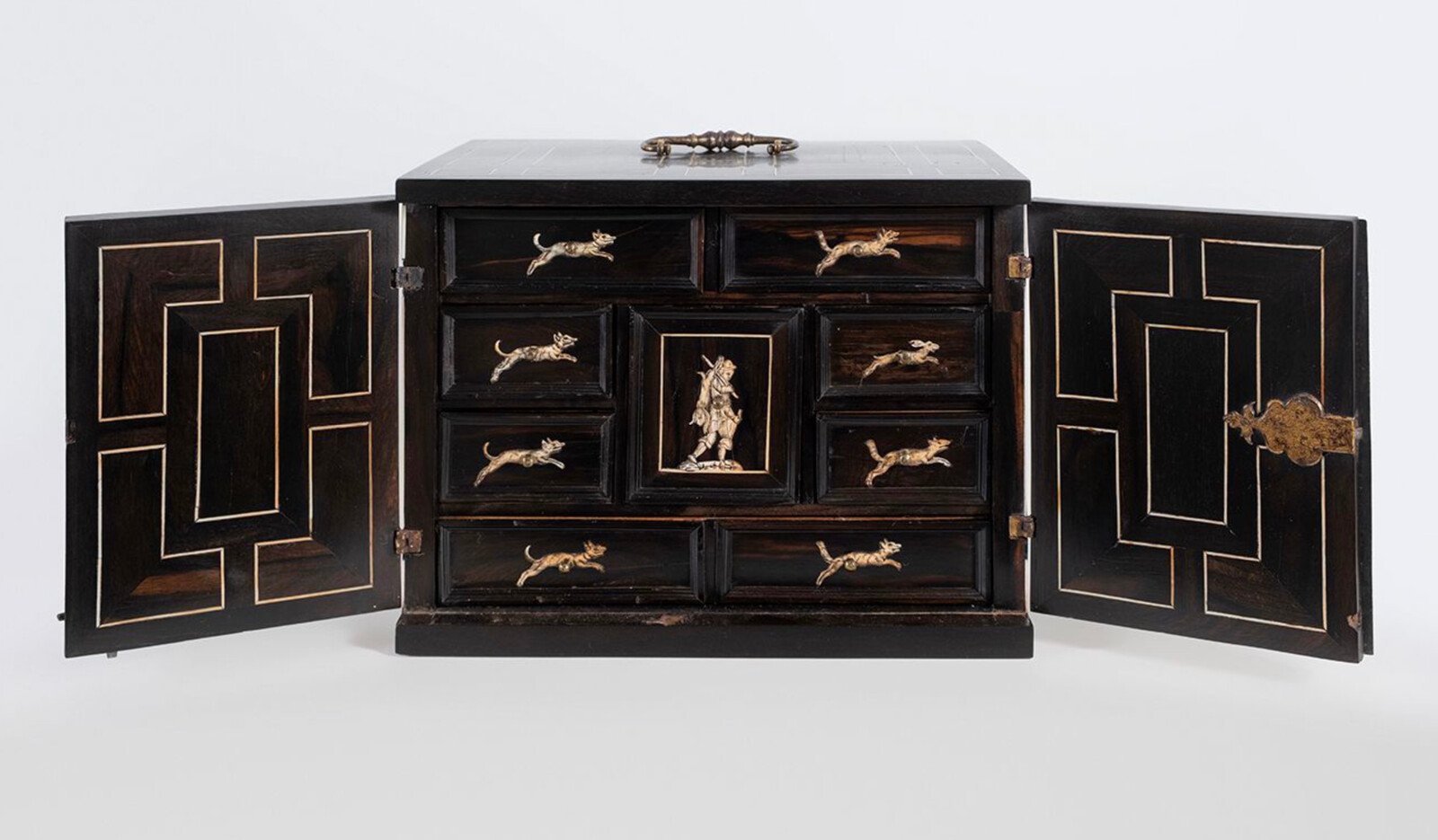
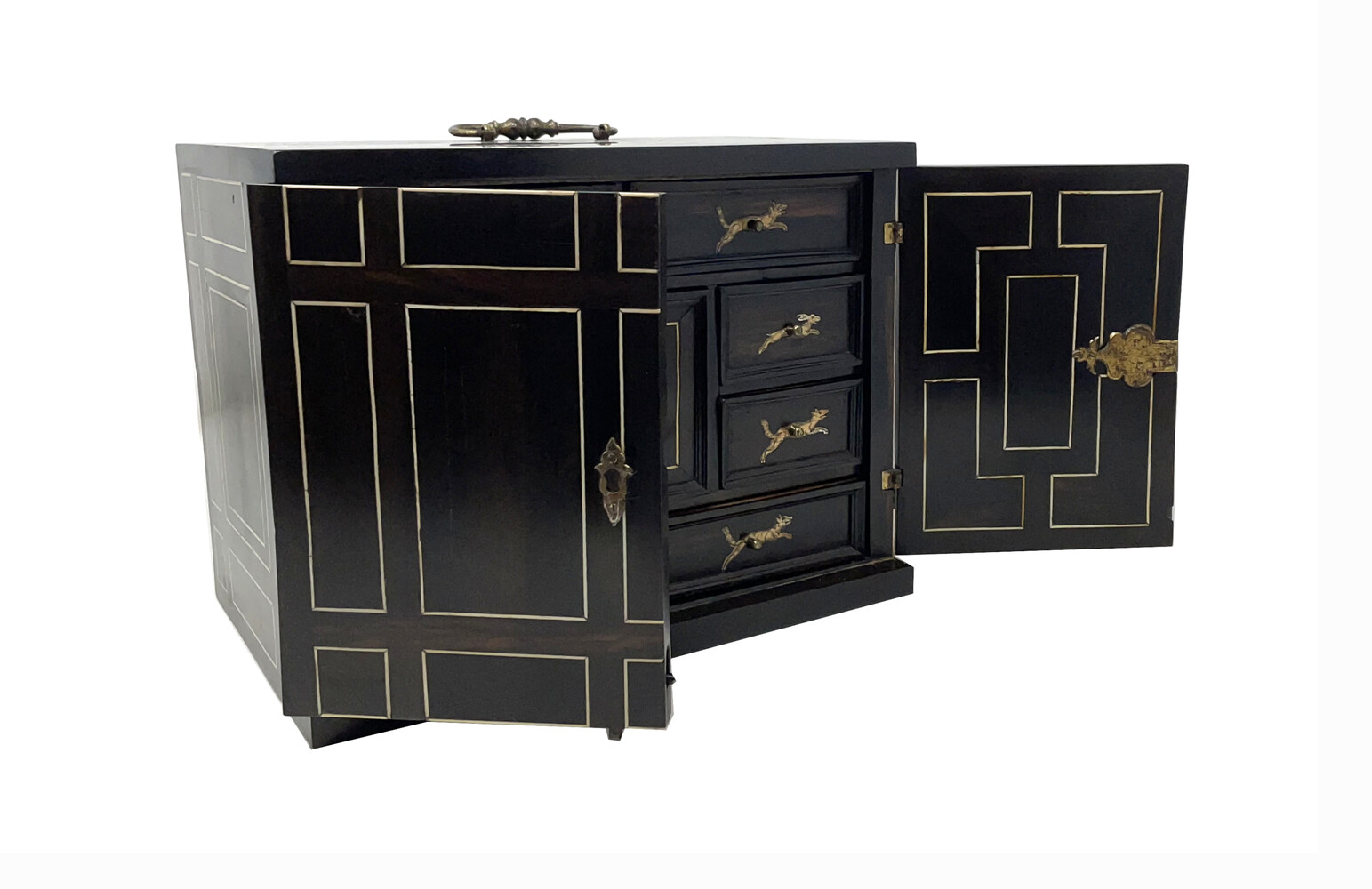
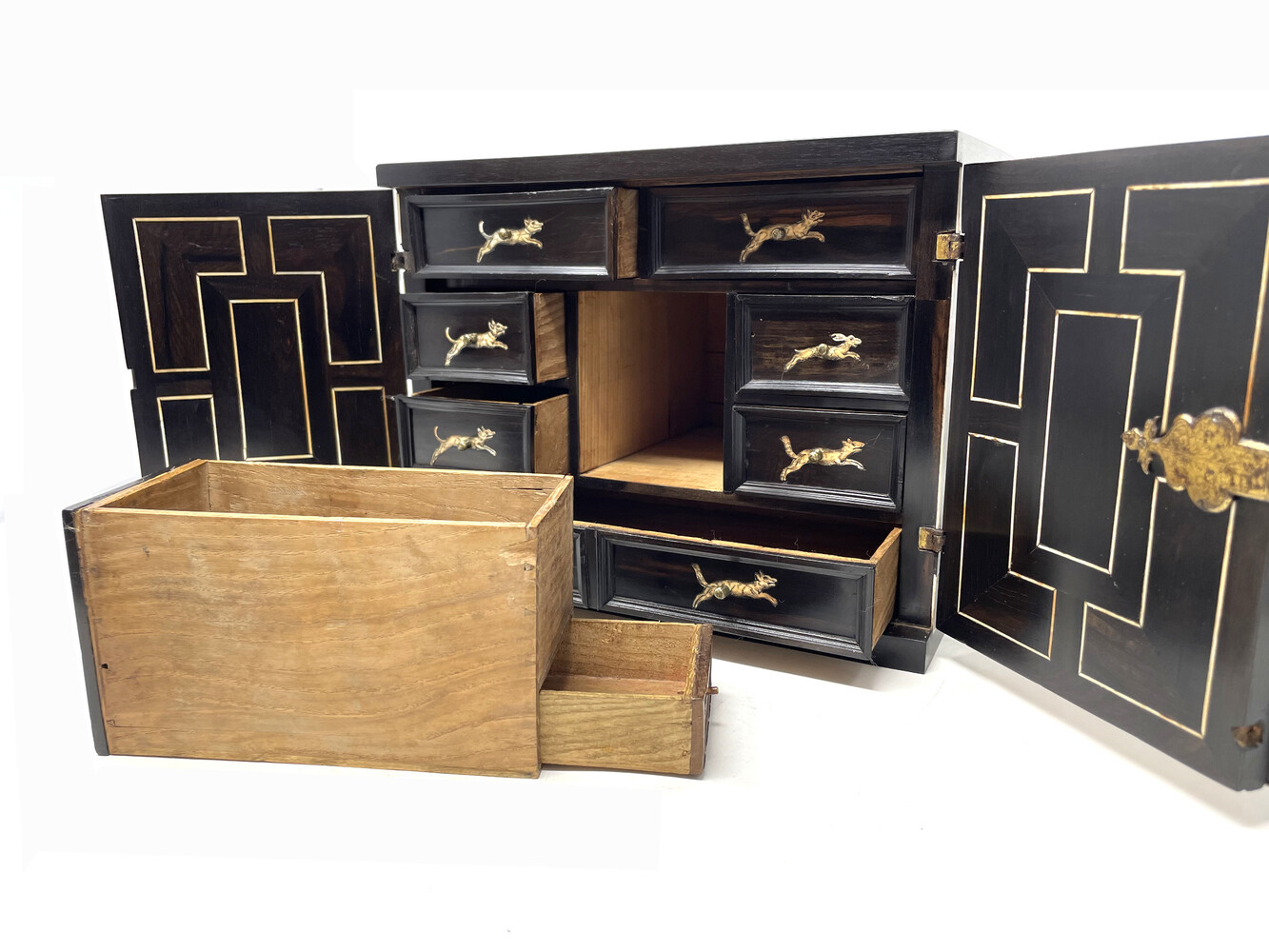
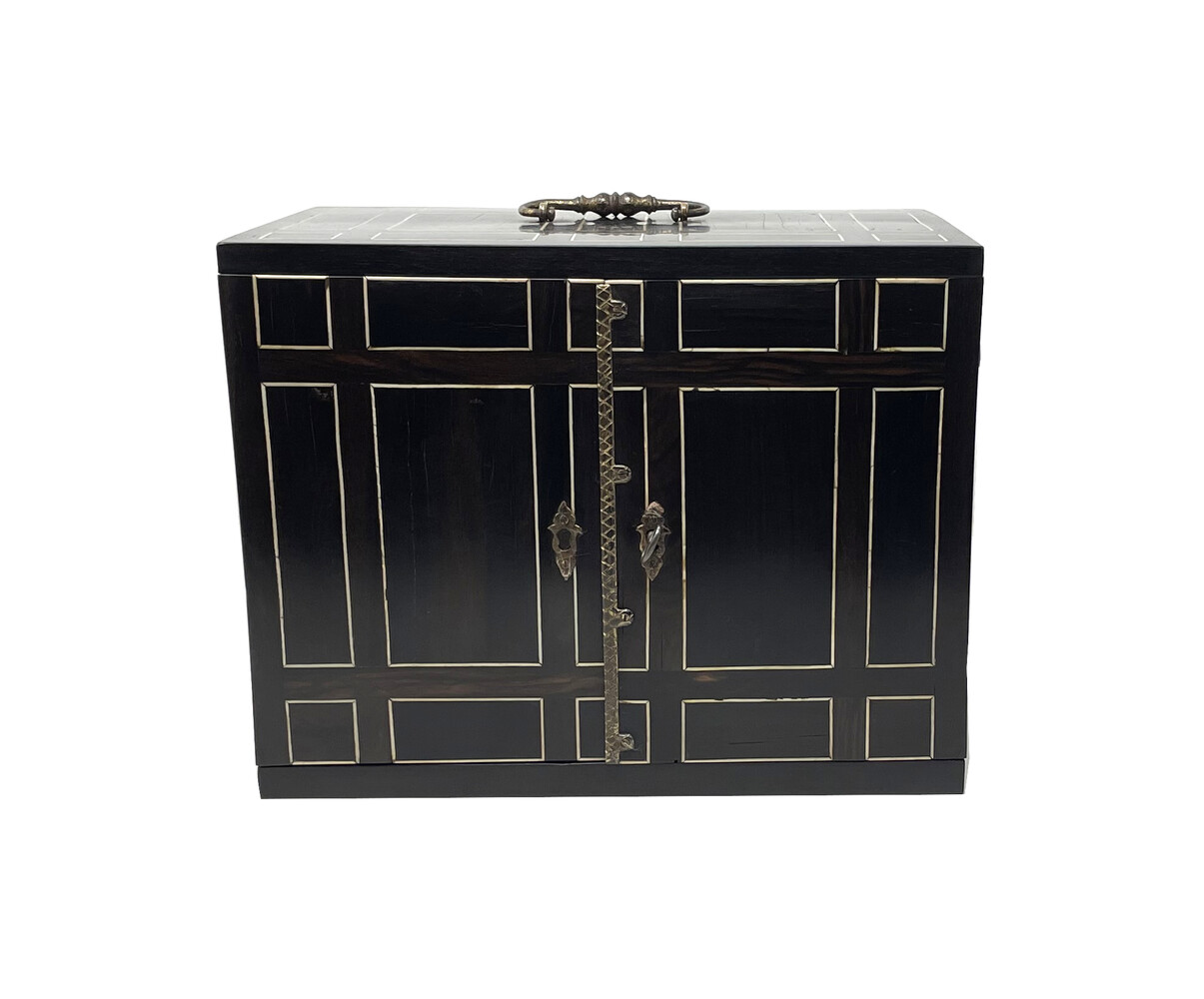
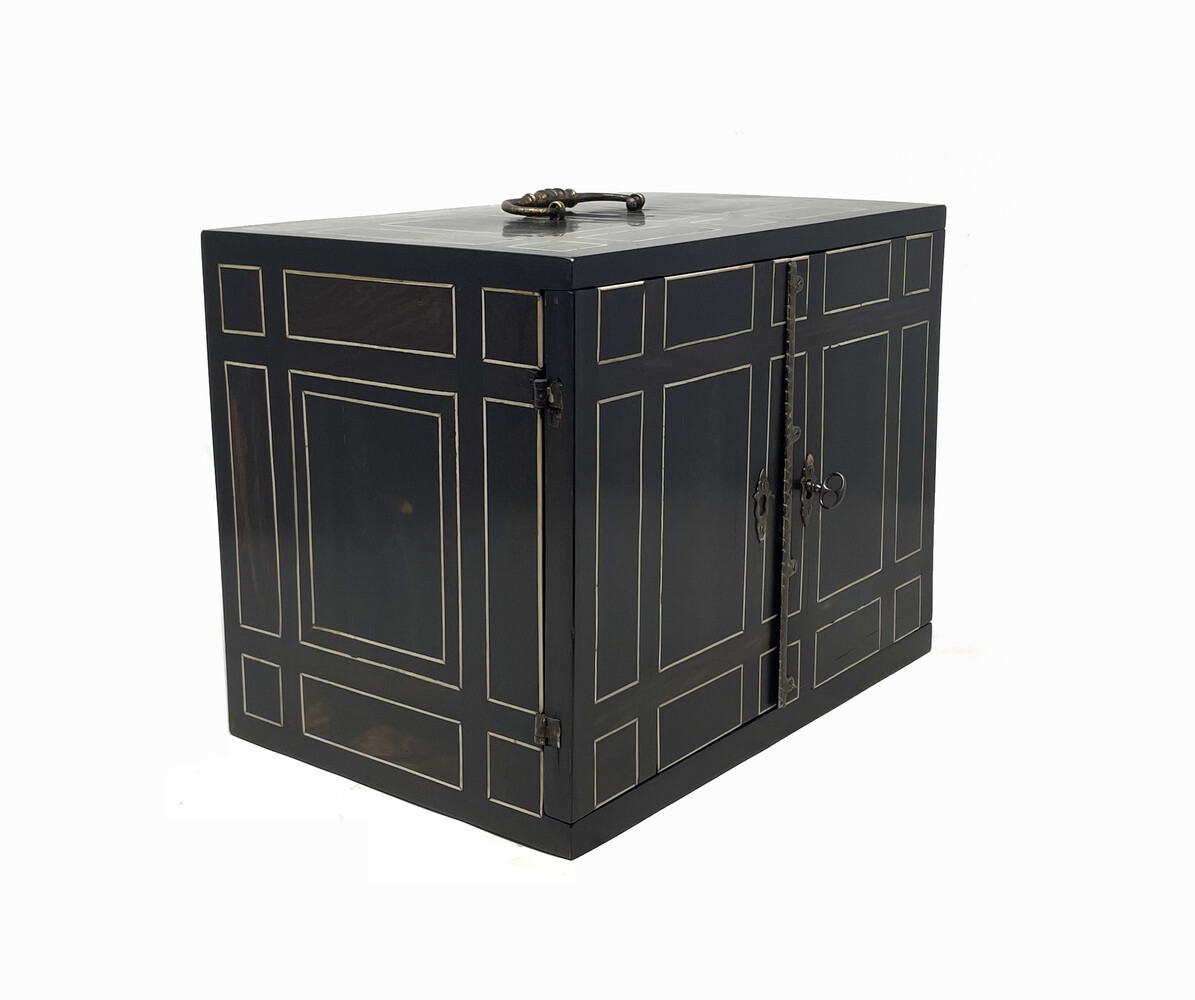
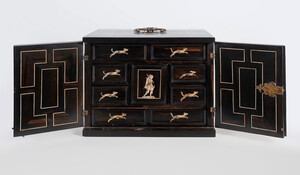
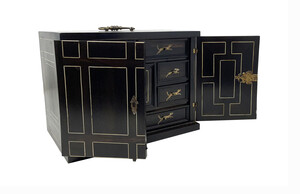
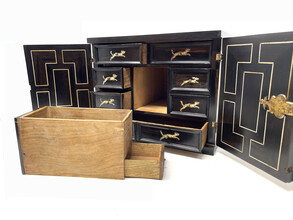
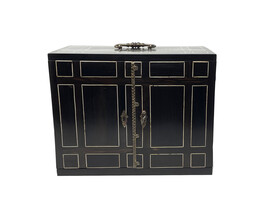
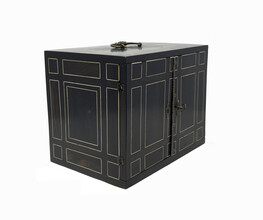
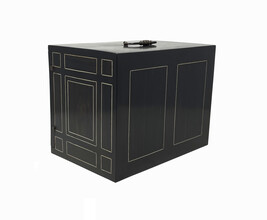
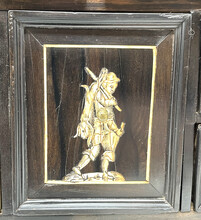
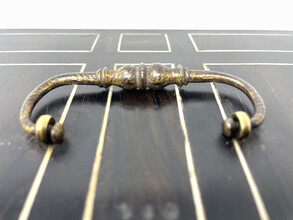
A MAGNIFICENT AUGSBURG COLLECTOR’S CABINET
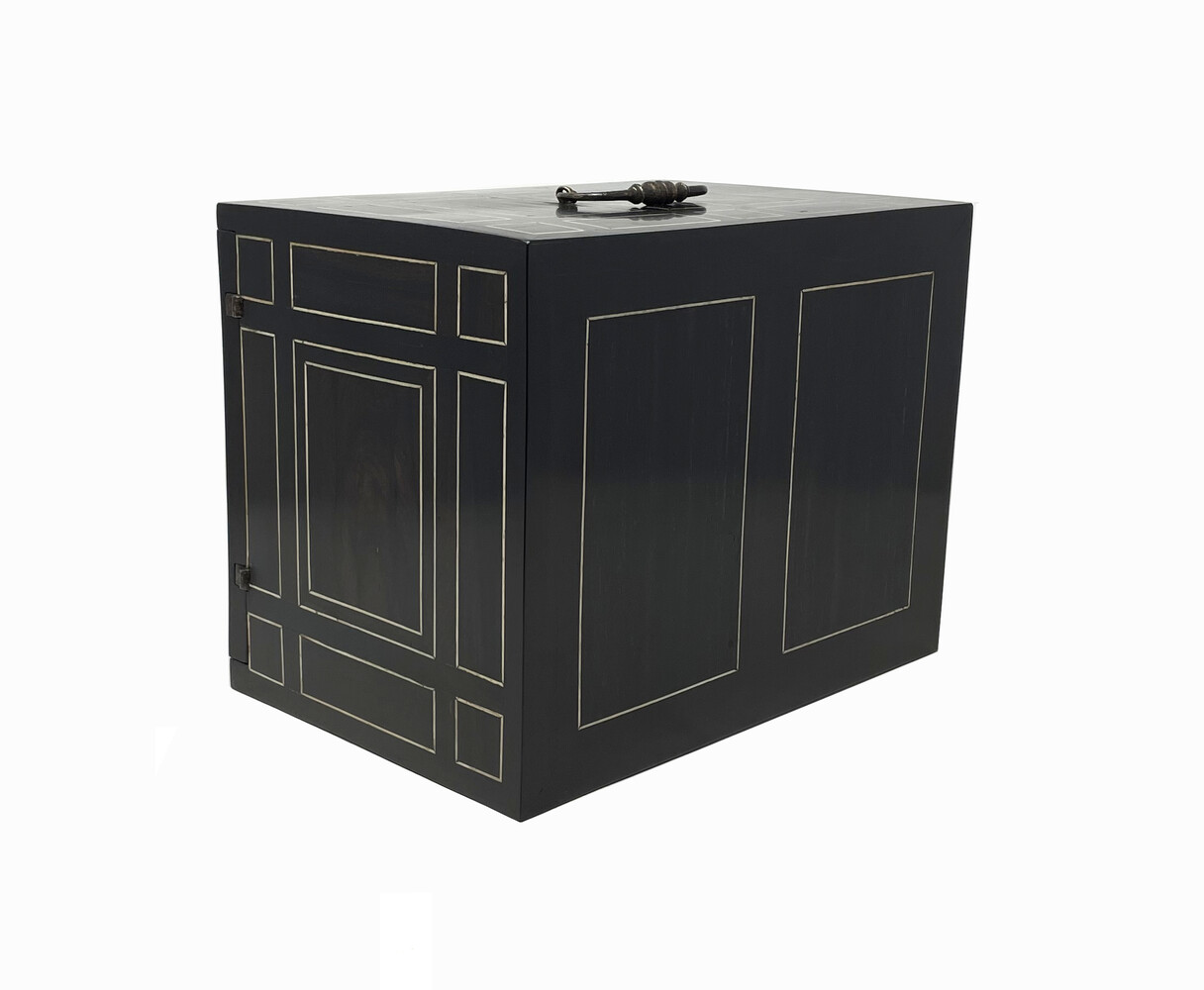
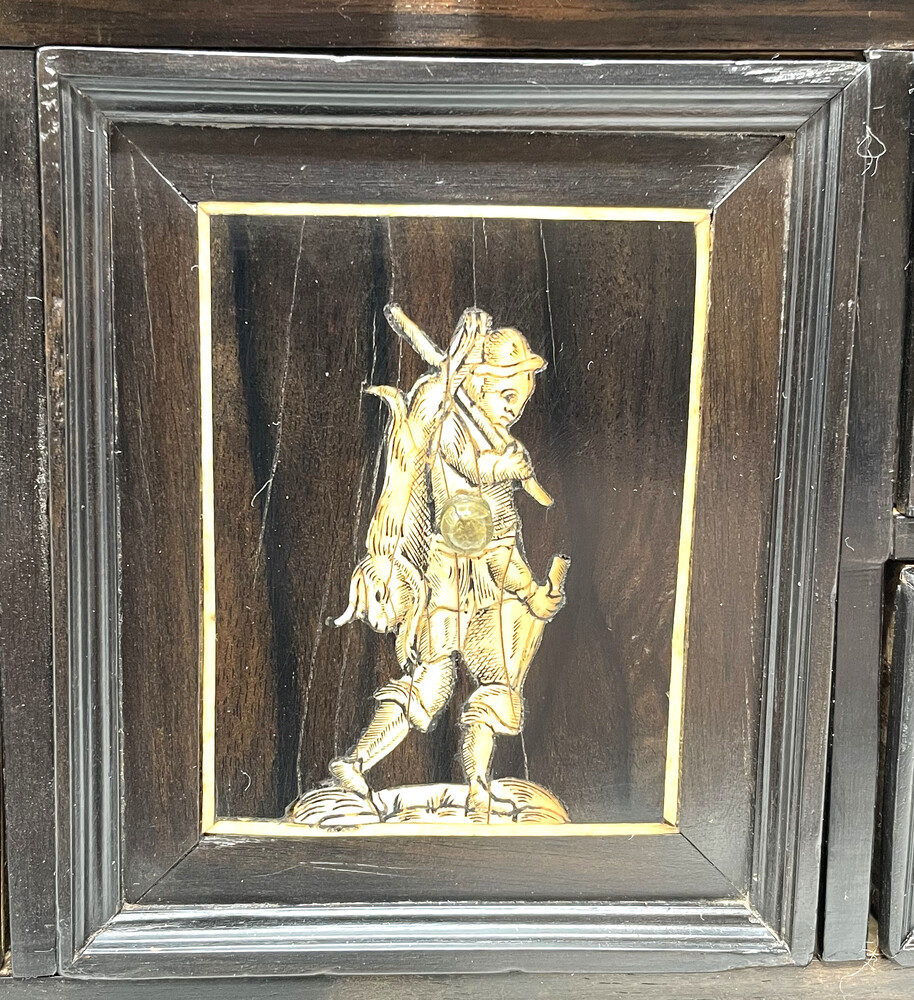
Veneered with ebony and bone hunted animals and a hunter ; with geometric bone-stringing patterns on the outside,
8 drawers and one secret drawer.
Circle of Ulrich Baumgartner.
Dimensions : 25 x 19,5 x 17 cm. Open : 48x 19,5 cm.
Augsburg, 1st half 17th century.
No marks found.
Comparanda :
- Musée de l'oeuvre Notre-Dame de Strasbourg
Baumgartner was noted for his luxury boxes and cabinets, especially the Augsburg cabinets, which were highly decorative pieces of furniture used to store precious objects. These pieces were commissioned by the nobility and gentry and were characterized by a combination of ebony, ivory or tortoiseshell inlay, semi-precious stones and exotic woods. Stylistically they were inspired by Flemish and Italian early Baroque furniture. His workshop in Augsburg, a key city in the production of decorative arts in the 17th century, was highly influential. His cabinets became status symbols and some of his pieces are preserved in museums and private collections. The Pomeranian Desk is one of Ulrich Baumgartner's most iconic works, created around 1617-1620 in Augsburg, Germany. It is a masterpiece of Baroque furniture art and an extraordinary example of the luxury cabinetmaking of the period. It is a large, richly decorated cabinet that combines desk functions and storage space. It was designed to be a showpiece, intended for the nobility. The piece of furniture was commissioned by Philip II of Pomerania, Duke of Stettin, as a symbol of his power and cultural refinement. Today, the Pomeranian Desk is housed in the Kunstgewerbemuseum in Berlin, where it is considered one of the museum's most valuable pieces.